Legal Solutions for the Modern World

Company Formation in UAE

The United Arab Emirates is one of the world’s most attractive destinations to start and grow a business. With 100% foreign ownership, a strategic location between East and West, a strong banking sector and a stable, pro-business environment, the UAE gives entrepreneurs and investors a powerful platform to trade locally, regionally and internationally.

Company formation in the UAE is the legal process of registering and licensing a business through a mainland economic department, a free zone authority or an offshore registry. As a full-service corporate service provider, we manage the entire journey for you — from selecting the right structure and securing your trade license to processing investor visas and opening a corporate bank account — across all seven Emirates.

Regional Advantages

Why Start a Business in the UAE

The UAE combines commercial freedom with world-class infrastructure, making it a natural choice for founders relocating or expanding into the region.

100% foreign ownership

available across all free zones and most mainland activities.

Strategic location

a gateway between Europe, Asia and Africa, served by leading ports and airports such as Jebel Ali, Khalifa Port and Dubai South.

Full profit repatriation

freely move capital and profits with no restrictions on foreign currency.

Residence pathways

investor, partner and Golden Visa options for owners and their families.

Strong banking sector

access to established UAE and international banks for corporate accounts.

Stable environment

a secure, well-regulated and business-friendly jurisdiction with an extensive double-tax treaty network.

UAE Business Setup Overview

There are three main routes to forming a company in the UAE, each suited to a different commercial objective. The right choice depends on where you intend to trade, your activity, your ownership and visa needs, and your budget.

Our consultants assess your activity and goals and recommend the structure, jurisdiction and license category that fit your business best.
Mainland Company Formation

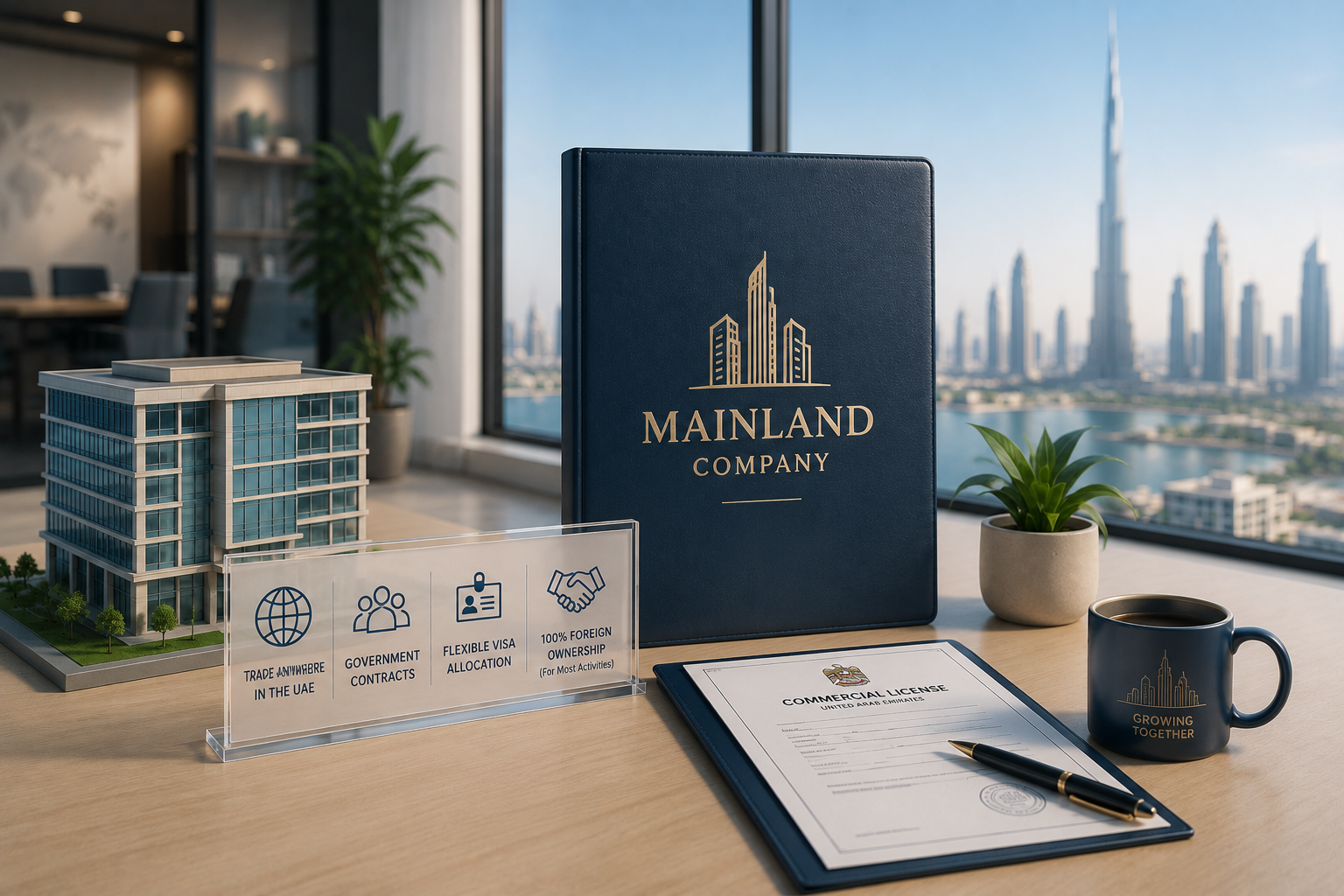
A mainland company is licensed by the economic department of the relevant emirate and can trade anywhere in the UAE as well as internationally. It is the right choice for businesses that need direct access to the local market, want to bid for government contracts, or require flexible visa allocation.

Most mainland activities now allow 100% foreign ownership, with only a limited list of strategic-impact activities requiring a local partner. Mainland companies operate from physical premises registered through an Ejari tenancy contract.
Free Zone Company Formation

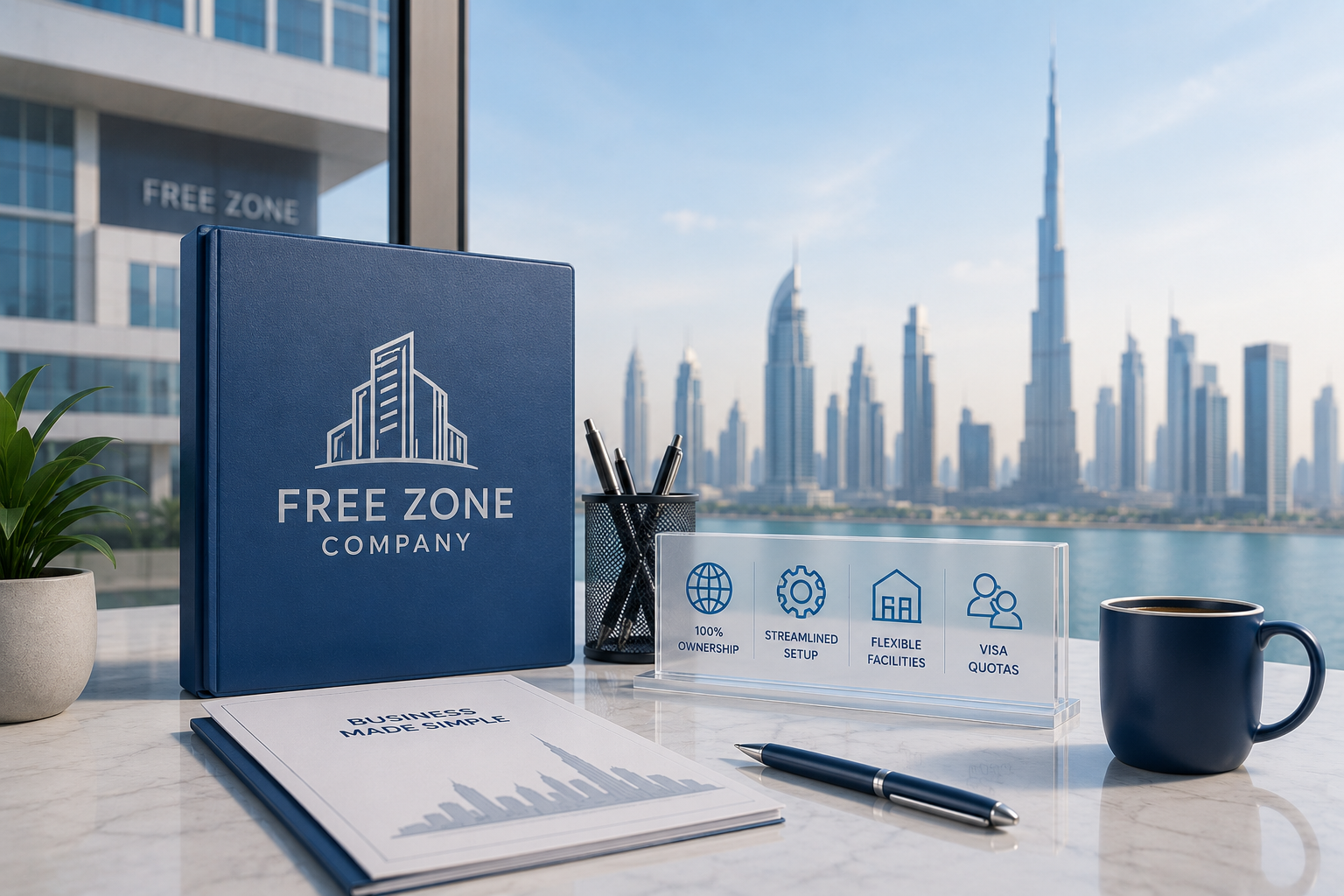
A free zone company is incorporated within one of the UAE’s designated economic zones. Free zones offer 100% foreign ownership, streamlined and cost-effective setup, flexible facilities from flexi-desk to warehouse, and their own visa quotas. They are ideal for trading, consulting, technology, media and logistics businesses.

A free zone company trades freely outside the UAE and within its zone. To sell directly in the UAE mainland market, it works through a locally appointed distributor or establishes a mainland branch.
Offshore Company Formation

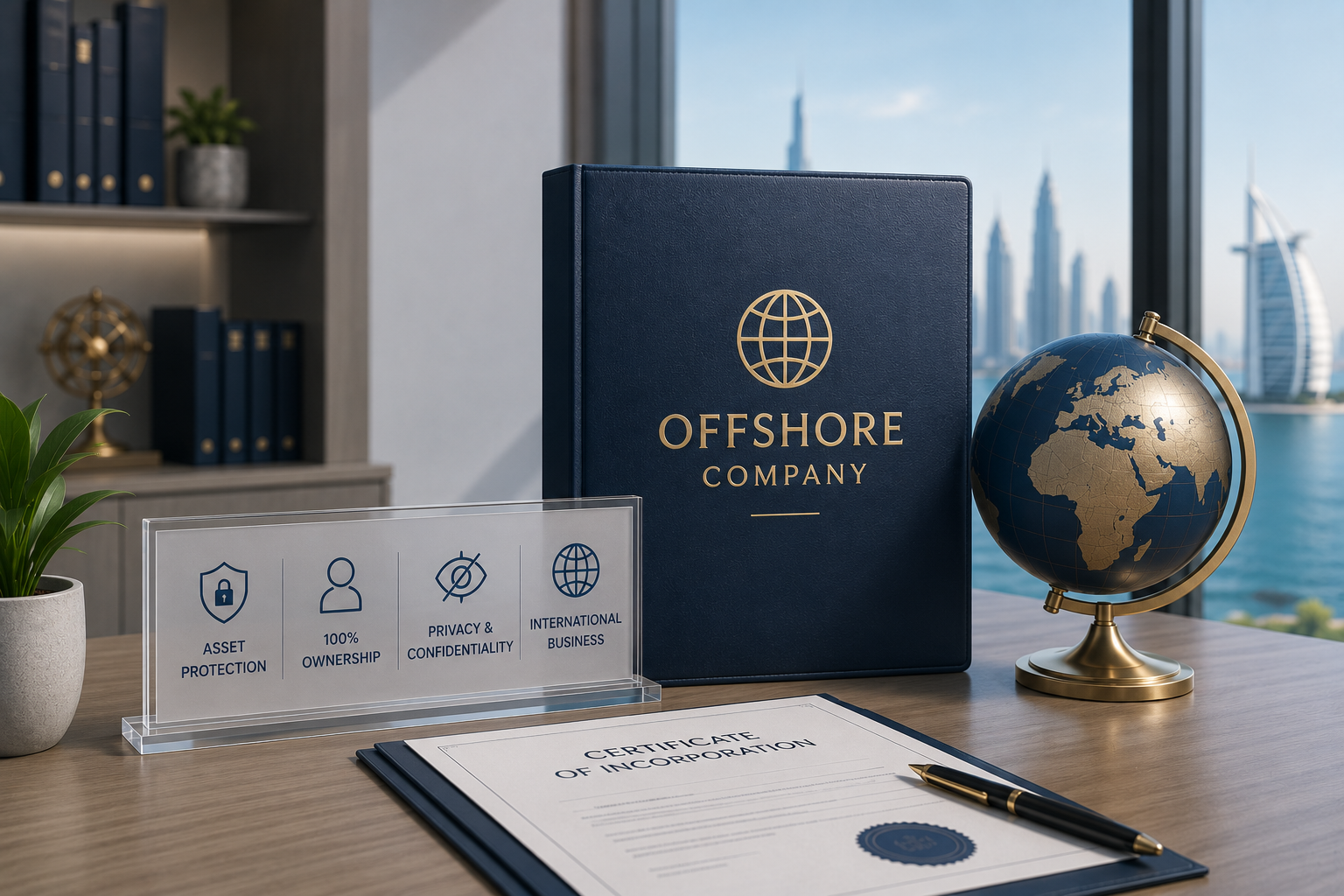
An offshore company is a non-resident structure used for holding assets, owning intellectual property, international trading and asset protection. It offers 100% ownership and privacy with a simple, low-cost setup.

Offshore companies cannot trade within the UAE and do not grant residence visas, but certain offshore entities may hold UAE property in approved freehold areas.

Mainland vs Free Zone vs Offshore

The table below summarises the key differences to help you choose the right structure.

Criteria Mainland Free Zone Offshore
Issuing authority Emirate economic department (Dubai DET, ADDED, SEDD and others) The relevant Free Zone authority RAK ICC, JAFZA Offshore or Ajman Offshore
Foreign ownership 100% for most activities 100% 100%
Trade inside the UAE Yes, direct local market access Through a distributor or a mainland branch Not permitted
Trade outside the UAE Yes Yes Yes
UAE residence visa Yes, quota linked to office space Yes, quota linked to package No
Office requirement Physical office with Ejari Flexi-desk to full office No UAE office
Government tenders Eligible Generally not eligible Not eligible
Best suited to Retail, F&B, contracting, local services Trading, consulting, tech, media, logistics Holding, asset protection, IP, international trade

Not sure which structure suits you best? Speak to our consultants for a free assessment.

UAE Jurisdictions Covered

We handle company formation across all seven Emirates, each licensed by its own economic department.

Trade License Categories

Your business activity determines the type of UAE trade license you need. Selecting the correct activity and license category is one of the most important steps in company formation.

  • Commercial license for trading, import, export and the distribution of goods.
  • Professional license for service providers, consultants and specialists.
  • Industrial license for manufacturing, processing and assembly activities.
  • E-commerce license for online retail and digital trading businesses.
  • Freelance license for individual professionals working under their own name in fields such as media, technology, education and consulting.
Company Ownership Structure

UAE companies can be owned by individual or corporate shareholders, in single-owner or multi-shareholder structures. Free zones and most mainland activities allow 100% foreign ownership, with the shareholding, share distribution and governance set out in the company’s Memorandum of Association.

Investor and Partner Visa Options

Forming a company in the UAE opens the door to residence for you and your family.

  • Investor or partner visa — linked to your shareholding in the company.
  • Visa quota — tied to office space for mainland companies and to your package for free zone companies.
  • Golden Visa — long-term, renewable residence for qualifying investors and entrepreneurs.
  • Family visas — sponsorship of spouse and children once your investor visa is issued.
Office and Facility Requirements

Workspace requirements depend on your structure. Mainland companies need physical premises registered through Ejari. Free zones offer flexible options ranging from flexi-desk and serviced offices to warehouses and land. Offshore companies require no UAE office.

Execution Roadmap

The Business Setup Process

We have streamlined UAE company formation into a clear, managed sequence so you can focus on your business while we handle the paperwork.

1. Consultation and structure selection we match your activity, jurisdiction and license type.
2. Business activity confirmation we map your activities to the approved DED or free zone codes.
3. Trade name reservation we propose and secure your company name.
4. Initial approval we obtain preliminary consent from the relevant authority.
5. Document preparation we draft the Memorandum of Association and supporting paperwork.
6. Facility setup we arrange your flexi-desk, office or Ejari tenancy as required.
7. Submission and approvals we lodge the application and obtain any activity-specific approvals.
8. License issuance your UAE trade license is issued.
9. Visa processing we apply for your investor and staff visas, Emirates ID and medical.
10. Bank account opening we introduce you to our banking partners and assist with the application.
Documents Required

Document requirements vary by structure and licensing authority. As a guide, an individual shareholder typically provides passport copies, proof of address, a photograph and a completed application, while a corporate shareholder also provides the parent company’s incorporation documents and a board resolution. See each jurisdiction page for its exact, authority-specific checklist, or request a tailored list after your consultation.

Cost Considerations

The cost of forming a company in the UAE depends on several factors: the jurisdiction, the number of business activities, the visa quota, the type of facility and the license category. Free zone packages generally start lower than mainland setups, while offshore incorporation is usually the most economical. Government and authority fees are separate from professional service fees. Contact us for a personalised, all-inclusive quote with no hidden charges.

Estimated Setup Timeline

Timelines depend on the jurisdiction, activity and approvals involved.

3-7 Days

Free zone incorporation

5-10 Days

Mainland licensing

2-5 Days

Offshore incorporation

+2-3 Weeks

Visa and Emirates ID
The Legacy Advantage

Why Choose Legacy Partners

We are a full-service corporate service provider supporting entrepreneurs and investors at every stage of their UAE journey.

Complete Coverage

Mainland, free zone and offshore formation across all seven Emirates.

Direct Authority Relationships

Established working ties with free zones and economic departments that speed up every stage.

End-to-End Service

Licensing, visas, Emirates ID and bank-account introductions handled under one roof.

Transparent Packages

Clear, all-inclusive pricing with no surprise invoices.

Ongoing Support

Continued assistance beyond incorporation through our wider service lines.

Frequently Asked Questions

It is the legal process of registering and licensing a business through a mainland economic department, a free zone authority or an offshore registry, resulting in a valid UAE trade license to operate.

Yes. All UAE free zones allow 100% foreign ownership, and most mainland activities also permit full foreign ownership, with limited exceptions for certain strategic activities.

A mainland company can trade directly across the UAE. A free zone company offers 100% ownership and fast setup but trades inside the UAE through a distributor or branch. An offshore company is for holding and international business and cannot trade onshore or grant residence visas.

It depends on your activity and budget. DMCC, IFZA, JAFZA and DAFZA suit trading and logistics; DIFC and ADGM suit financial services; SHAMS and SAIF Zone suit media and cost-sensitive setups; RAKEZ and UAQ FTZ are among the most economical.

Free zone formation usually takes 3 to 7 business days, mainland licensing 5 to 10 business days, and offshore incorporation 2 to 5 business days. Visa and Emirates ID processing adds about 2 to 3 weeks.

It is the official permit that authorises a company to carry out specific activities. The main categories are commercial, professional, industrial, e-commerce and freelance.

Mainland companies require physical premises with an Ejari tenancy. Free zones offer flexible options from flexi-desk to full office. Offshore companies need no UAE office.

Yes. Mainland and free zone companies allow investor or partner visas linked to shareholding. Offshore companies do not grant residence visas.

It is a long-term, renewable residence visa for qualifying investors, entrepreneurs and talent, and can include the spouse and children, subject to the applicable criteria.

RAK ICC is the Ras Al Khaimah International Corporate Centre, the UAE’s leading offshore registry, widely used for holding companies, asset protection and international structuring.

Typically passport copies of shareholders and directors, proof of address, a photograph and a completed application. Corporate shareholders also provide incorporation documents, a board resolution and attested papers.

Cost depends on the jurisdiction, number of activities, visa quota, facility type and license category. Free zone packages generally start lower than mainland, and offshore is usually the most economical. Request a quote for accurate figures.

Many free zones and offshore registries allow remote incorporation using attested documents and a power of attorney. However, visa issuance and Emirates ID generally require an in-person visit.

Each emirate licenses mainland companies through its own economic department, including Dubai DET, Abu Dhabi DED (ADDED), Sharjah DED (SEDD), Ajman DED, Ras Al Khaimah DED, Fujairah DED and Umm Al Quwain DED.

Any of the seven: Dubai, Abu Dhabi, Sharjah, Ajman, Ras Al Khaimah, Fujairah and Umm Al Quwain, each with its own authority and free zones.

A free zone company is a new, independent entity. A branch is an extension of an existing parent company, carrying its name and conducting the same activities.

Not directly. It can serve the mainland market through a locally appointed distributor or by opening a mainland branch.

Many free zones and mainland activities have no fixed minimum paid-up capital, though some jurisdictions and activities specify a figure, which we confirm during structure selection.

Certain offshore companies, such as RAK ICC and JAFZA Offshore, may own property in designated freehold areas, subject to the rules of the relevant authority.

It is the constitutional document defining a company’s shareholders, share distribution, activities and governance, and is required for most UAE companies.

Yes. As part of the formation process we introduce you to suitable UAE banking partners and assist with the documentation needed to open a corporate account.
Related Services

Once your company is formed, we support you through every ongoing requirement. Explore our dedicated services for Corporate Tax, VAT, Audit, Accounting, Trademark Registration and Business Advisory.

Start Your UAE Company Today

Book a free, no-obligation consultation and let our experts guide you to the right structure, jurisdiction and license for your business. From your first enquiry to your corporate bank account, Legacy Partners is your single point of contact.

Ready to establish your legacy?

Join over 500+ entrepreneurs who chose Legacy Partners.