
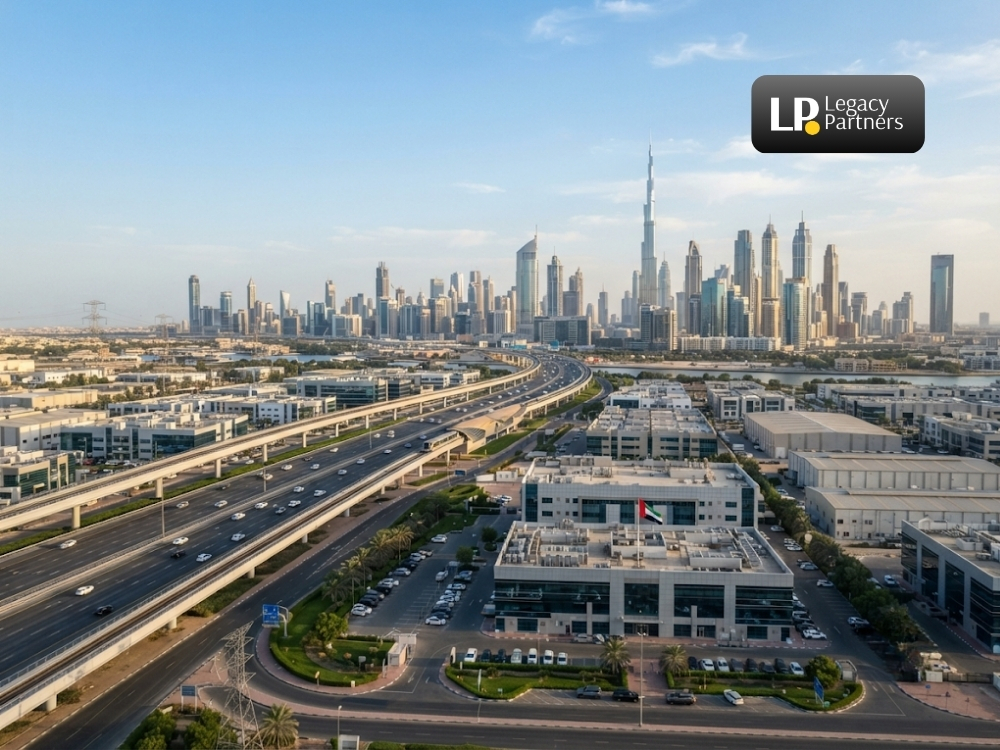
In a significant regulatory shift, Dubai has officially established a structural framework that allows free zone establishments to conduct commercial activities within mainland Dubai without the legal requirement to form a separate mainland entity.
This reform, introduced under Dubai Executive Council Decision No. 11 of 2025, was issued by His Highness Sheikh Hamdan bin Mohammed bin Rashid Al Maktoum, Crown Prince of Dubai and Chairman of the Executive Council, and is implemented under the joint supervision of the Dubai Department of Economy and Tourism (DET) and the Dubai Free Zone Council (DFZC).
The Decision marks a key milestone in the evolution of Dubai’s dual economic system, formalizing the legal parameters that connect free zone ecosystems and the onshore mainland commercial framework.
Legal Foundation and Regulatory Options
Decision No. 11 of 2025 provides the statutory mechanism for registered free zone entities to lawfully practice their economic activities outside their designated zones. Under the text of the Resolution, eligible free zone establishments may operate on the mainland through three distinct licensing pathways:
1. A license to establish a formal branch of the free zone entity within the Emirate of Dubai mainland.
2. A license to establish a branch of the free zone entity operating out of the relevant free zone (subject to a statutory annual fee of AED 10,000).
3. A temporary permit to carry out specific economic activities within the Emirate for a limited duration.
The short term framework functions as a temporary operating authorization, providing a flexible option for companies to expand their commercial reach into mainland markets while retaining their primary corporate structure and headquarters within their free zone jurisdiction.

Statutory Costs, Validity, and Scope
The operational framework for the temporary permit establishes clear regulatory limits and fiscal obligations:
• Fees and Renewals: The statutory fee for issuing or renewing the temporary operating permit is set at AED 5,000.
• Validity Period: The permit is valid for a maximum duration of six (6) months and may be renewed for additional periods, subject to regulatory approval.
• Scope of Application: This framework applies to registered free zone establishments across Dubai, with the explicit statutory exclusion of financial companies licensed to operate within the Dubai International Financial Centre (DIFC).
Pursuant to Article 9 of the Decision, the DET, in coordination with relevant licensing authorities, is tasked with defining the official scope of permitted economic activities. The exact list of eligible sectors remains subject to official lists issued by the Department. Free zone companies must also secure any necessary consents and approvals from sector specific UAE regulatory authorities governing their intended line of business.
Macroeconomic Impact and Strategic Context
The framework is to be implemented and administered by the Department of Economy and Tourism (DET), through its licensing arm, the Dubai Business Registration and Licensing Corporation (DBLC), in coordination with the Dubai Free Zone Council.
Official projections and strategic updates released by the DET clarify the intended scale of this rollout:
• Target Audience: The portal integration is projected by authorities to open up immediate market opportunities for over 10,000 active free zone firms established across the emirate.
• Economic Forecasts: By easing cross jurisdiction operations and facilitating access to domestic supply chains, the initiative is projected to drive a 15% to 20% increase in cross jurisdictional commercial activity within its first year of implementation.
Operational Execution and Workforce Integration
From an operational standpoint, the framework introduces human resource optimization by allowing free zone establishments to utilize their existing registered workforce for mainland activities.
The framework appears to permit free zone establishments to utilize their existing workforce for approved mainland activities, subject to compliance with applicable immigration, labor, and sector specific regulations.
Corporate Tax and Financial Compliance Requirements
To maintain transparency and satisfy auditing oversight, the Resolution mandates strict structural separation of financial operations. Free zone establishments utilizing these pathways must ensure that separate financial records and accounting books are strictly maintained for all business activities conducted outside their designated free zone.
This accounting isolation is critical under the UAE federal fiscal framework:
Tax Compliance Standard: Income derived from mainland activities may be subject to UAE Corporate Tax in accordance with the Federal Corporate Tax regime, while qualifying free zone income may continue to benefit from the preferential tax treatment available to a Qualifying Free Zone Person, subject to the applicable conditions under UAE tax legislation.
Failure to segregate financial data or properly track onshore vs. offshore revenue streams may pose significant compliance risks under Federal Tax Authority (FTA) rules.
Transition Period and Enforcement
The legislation provides a one (1) year grace period from the date of the implementation of the Decision for establishments currently practicing activities outside their zones to adjust their legal status and regularize their operations. The Director General retains the authority to extend this period for an additional year should it be deemed necessary. Non compliance after the transition window may result in statutory penalties, including the suspension or revocation of operating privileges.
Conclusion
Dubai Executive Council Decision No. 11 of 2025 represents a landmark advancement in the harmonization of Dubai's corporate legal environment. By authorizing free zone establishments to conduct activities within the mainland through clear licensing options and structured temporary permits, the Government of Dubai has balanced economic flexibility with rigorous regulatory discipline. For global investors and corporate planners, this framework offers an institutional balance of compliance, cost efficiency, and cross border operational flexibility.
Need guidance on Dubai's new free zone to mainland framework?
Our team at Legacy Partners provides end to end support with licensing, regulatory approvals, and corporate tax compliance to help your business expand with confidence.
Speak to our experts today. info@legacypartners.ae
Frequently Asked Questions
Updated On: 09 Sep, 2026